Which citizenship by investment programmes are open in 2026, and what do they cost?
By Sanad Boughalmi, Co-founder, systems and international desk. Edited by Selma Setta. Published 26 October 2026, updated 3 November 2026. Figures checked 3 November 2026.
Ten programmes accept applications in 2026: Antigua and Barbuda, Dominica, Grenada, St Kitts and Nevis and Saint Lucia in the Caribbean (contributions from US$200,000 to US$250,000 under a 2024 regional floor of US$200,000), plus Türkiye (US$400,000 property), Egypt, Jordan, Vanuatu and North Macedonia. Malta's scheme was struck down by the EU Court of Justice on 29 April 2025 and is closed.
| Caribbean minimum contribution (regional floor since 1 July 2024) | US$200,000 |
|---|---|
| Dominica Economic Diversification Fund, single applicant | US$200,000 |
| Antigua and Barbuda National Development Fund, single applicant or family | US$230,000; suspension signalled for 12 November 2026, no decision published |
| Grenada National Transformation Fund, up to four people | US$235,000 |
| St Kitts and Nevis Sustainable Island State Contribution, up to four people | US$250,000 |
| Saint Lucia National Economic Fund, up to four people | US$240,000 |
| Türkiye real estate route | US$400,000, held three years |
| Malta's investor citizenship scheme | Closed; ruled contrary to EU law on 29 April 2025 (Case C-181/23) |
What counts as citizenship by investment in 2026?
Citizenship by investment means a state grants nationality in return for a defined contribution to a government fund, a purchase in an approved project, or another qualifying investment, after due diligence on the applicant. The grant follows a statutory process with a published fee schedule, not a discretionary decision.
Ten programmes accept new applications in early November 2026. Five are in the Eastern Caribbean and are run by dedicated units with gazetted regulations. The other five (Türkiye, Egypt, Jordan, Vanuatu and North Macedonia) publish less, and two of them are under pressure from the European Commission.
One programme that appears in older guides is gone. Malta’s scheme was struck down by the Court of Justice of the European Union on 29 April 2025 and is closed to new applicants. No EU member state grants citizenship in exchange for a payment or investment.
This guide gives the published figures per programme, the family rules, presence requirements and what each unit says about timing, with links to our deeper guide on each Caribbean programme. Kestrel Global matches enquiries with licensed firms; it does not advise on applications. A licensed agent or lawyer can confirm how any figure applies to a specific family.
How does the Caribbean US$200,000 minimum work?
Antigua and Barbuda, Dominica, Grenada, St Kitts and Nevis and Saint Lucia are the signatories of a Memorandum of Agreement published in March 2024. Their joint release through the OECS on 22 June 2024 states: “With effect from July 01, 2024, all countries have agreed that the minimum price for any CBI options shall be US$200,000.”
The floor is the minimum paid into any government fund, government project or private development, whichever option is used. The same release adds: “The signatories to the MOA make it abundantly clear that discounting of the agreed minimum price is illegal.” Agents, developers and marketing firms with evidence of discounting are asked to report it to the unit, the investment migration agency or the Financial Intelligence Unit of the country concerned.
Each unit then rewrote its schedule. The result is a cluster of fund contributions between US$200,000 and US$250,000, with the differences sitting in how many family members the headline figure covers.
| Programme | Fund contribution | Covers | Each extra dependant |
|---|---|---|---|
| Dominica (Economic Diversification Fund) | US$200,000 single; US$250,000 with up to three dependants | 1 or up to 4 | US$25,000 (under 18), US$40,000 (18+) |
| Antigua and Barbuda (National Development Fund) | US$230,000 | Single applicant or any family size | No extra contribution; processing fee rises by US$10,000 per dependant from the fifth person |
| Grenada (National Transformation Fund) | US$235,000 | Up to 4 | US$25,000; US$50,000 or US$75,000 for certain parents and siblings |
| Saint Lucia (National Economic Fund) | US$240,000 | Up to 4 | US$10,000 (under 18), US$20,000 (over 18) |
| St Kitts and Nevis (Sustainable Island State Contribution) | US$250,000 | Up to 4 | US$25,000 (under 18), US$50,000 (18+) |
Figures are from each unit’s published schedule or gazetted regulations, checked on 3 November 2026. Due diligence, processing, interview and passport fees come on top; our Caribbean citizenship by investment costs guide adds them up for a single applicant and a family of four.
What does Antigua and Barbuda offer in 2026?
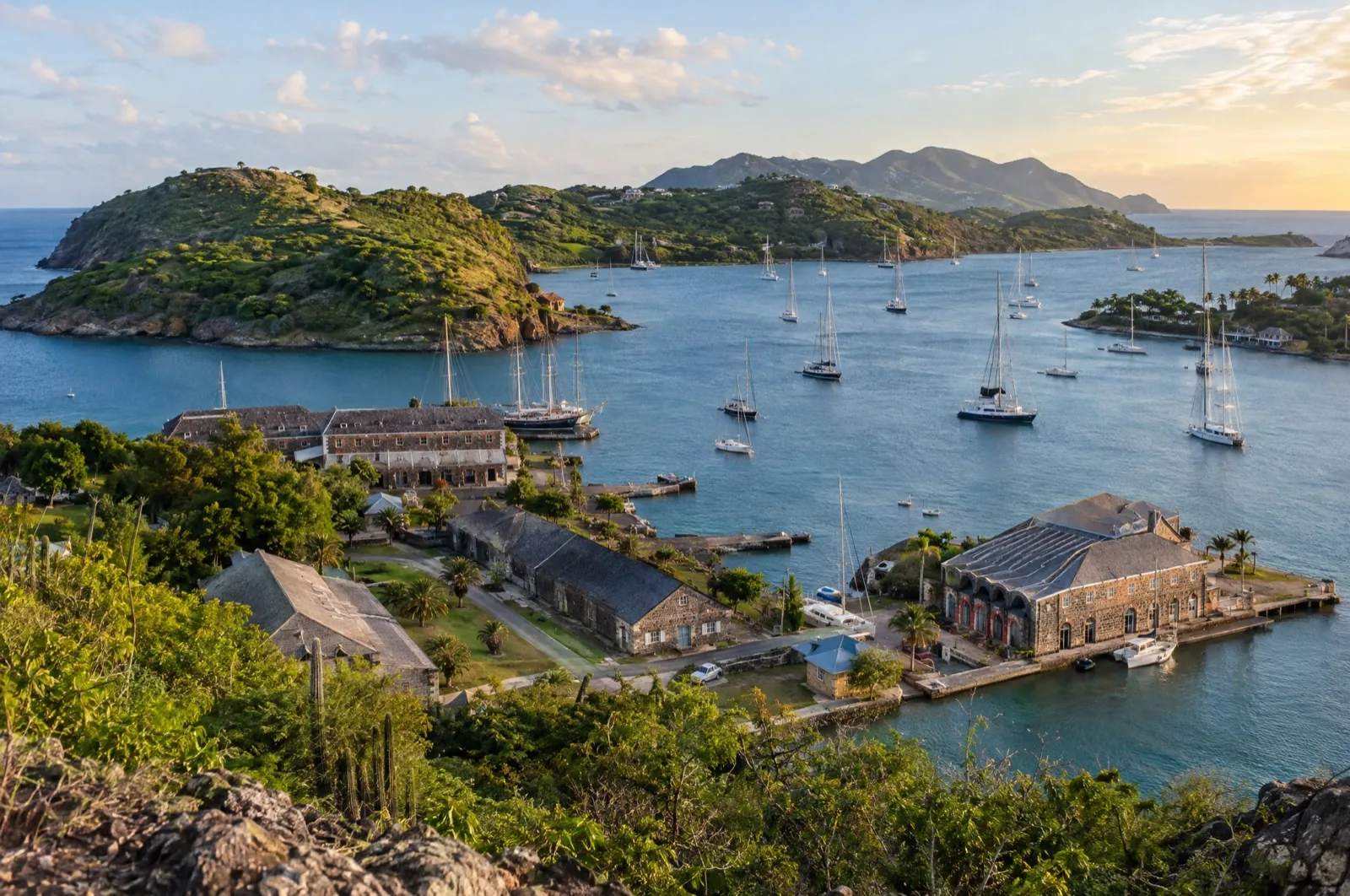
The Citizenship by Investment Unit’s schedule lists four options: a National Development Fund contribution of US$230,000, the same for a single applicant or a family, a University of the West Indies Fund contribution of US$260,000 (described as inclusive of processing fees), real estate of at least US$300,000, or a business investment of US$1,500,000 (or US$5,000,000 jointly, each investor contributing at least US$400,000).
Processing fees are US$10,000 for a single applicant and US$20,000 for a family of up to four, plus US$10,000 per further dependant. Due diligence is US$8,500 for the principal applicant, US$5,000 for a spouse, US$2,000 for a child aged 12 to 17 and US$4,000 for a dependant aged 18 to 30 or a parent aged 55 and over. Passports cost US$300 per person.
Children up to 30 who are financially dependent qualify, as do parents and grandparents aged 55 and over, and unmarried siblings. Real estate cannot be resold until five years after the purchase. Nationals of Afghanistan, Iran, North Korea, Somalia, Yemen and Sudan are restricted under a Cabinet decision of 26 February 2020, with narrow exceptions.
The Citizenship by Investment (Amendment) Act, 2016 lets the Minister deprive a citizen who “does not spend a minimum of five (5) days in Antigua and Barbuda during the period of five calendar years after his registration.” On 24 October 2026 the Prime Minister said that, on preliminary Cabinet discussions, a suspension of the programme by 12 November 2026 was very likely, while stressing that no final determination had been made. No Cabinet decision or notice from the unit had been published when we checked on 3 November 2026. Our Antigua and Barbuda guide and our update of 24 October set out the position; anyone considering Antigua should check the unit’s notices before paying any fee.
What does Dominica cost and require?

Dominica’s rules are in the Citizenship by Investment Regulations, 2024 (S.R.O. 8 of 2024), gazetted on 28 June 2024. Schedule 1 sets the direct contribution at US$200,000 for a main applicant and US$250,000 for a main applicant with up to three qualifying dependants, then US$25,000 per additional dependant under 18 and US$40,000 per additional dependant aged 18 or over.
Fees payable on submission are US$7,500 due diligence on the main applicant, US$4,000 per dependant, a US$1,000 interview fee per interview, a US$1,000 processing fee per application and US$500 per certificate of naturalisation. For a main applicant, spouse and two young children that comes to US$266,500 through the fund on the unit’s published lines, or US$274,500 if due diligence is charged on every dependant as the regulation’s fund clause reads.
The real estate option needs a minimum US$200,000 investment in an approved project, plus government fees of US$75,000 for the main applicant or US$100,000 for a main applicant with up to three dependants. The property may not be resold until at least three years have elapsed from the grant of citizenship.
Interviews are mandatory. Regulation 4(10) says every application is examined by the Financial Intelligence Unit “and every applicant shall attend an interview virtually or in person.” Regulation 8 gives the unit three months from submission to notify the agent of its decision. Dependants include children under 18, children aged 18 to 30 in higher education, and parents and grandparents above 65 who are substantially supported. The regulations also bar a change of name for five years after the certificate is granted. The 2026/27 budget address of 4 August 2026 says new citizens will have to be physically present for at least 30 days during their first five years; no start date had been gazetted. Our Dominica guide covers each route in detail.
What does Grenada’s schedule say?
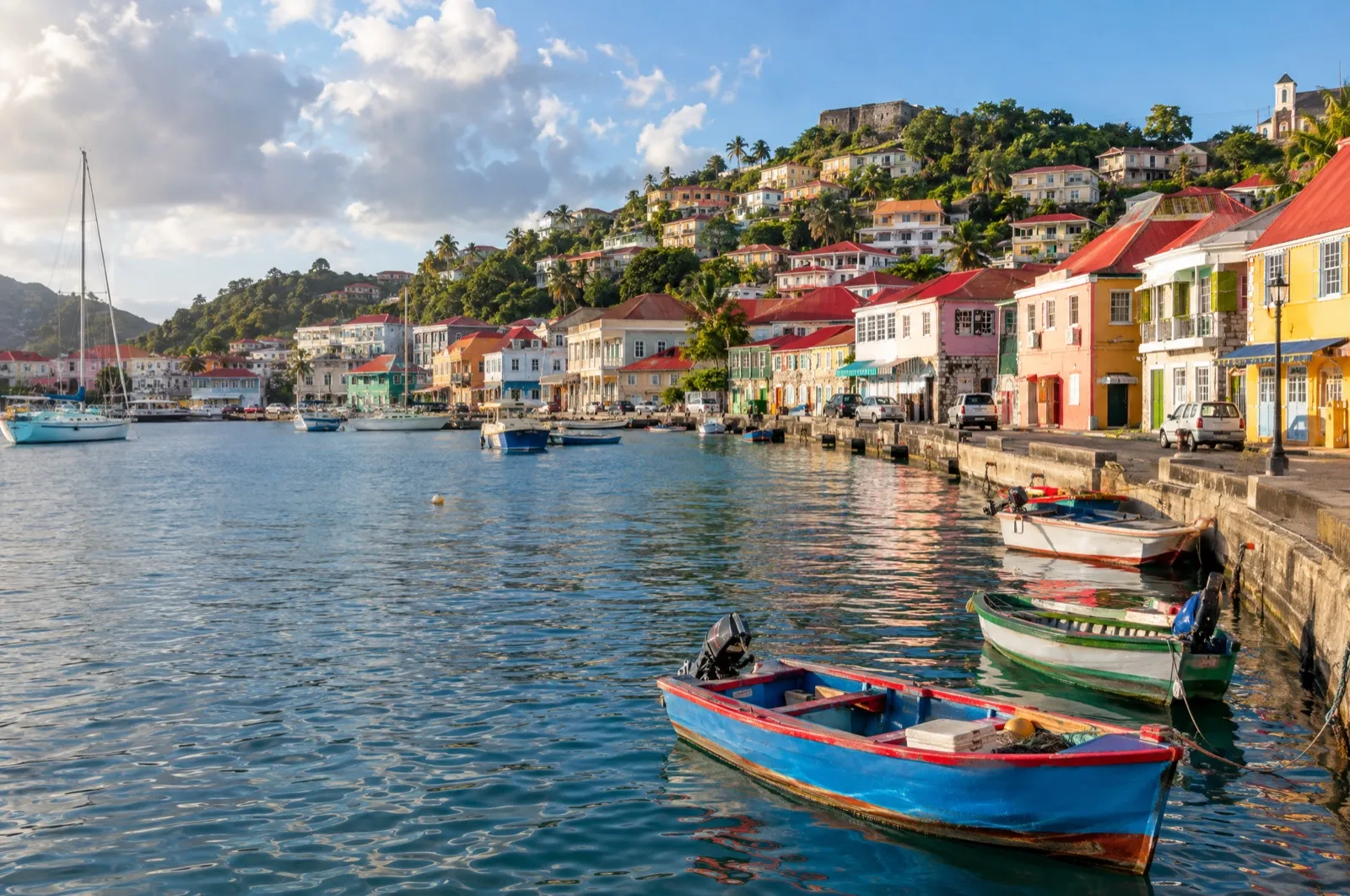
Grenada’s figures are in S.R.O. 12 of 2024, gazetted on 26 June 2024 and in force from 1 July 2024. The National Transformation Fund contribution is US$235,000 for a main applicant and up to three dependants, US$25,000 for each further dependant, US$50,000 for a dependant falling under paragraph (f) of the Act’s definition and US$75,000 for one under paragraph (g).
The real estate route is a minimum US$350,000 investment in an approved project, or US$270,000 for a share in a tourism accommodation unit bought by two or more individuals (the unit valued at a total of at least US$440,000). A government contribution of US$50,000 applies for a family of up to four. Interview fees of US$1,000 each apply to the main applicant, spouse, children aged 17 and over and dependent parents (S.R.O. 34 of 2023).
The Grenada Citizenship by Investment (Amendment) Bill, 2026 would write the regional regulator into the Act and insert new sections 7A and 7B on residency and genuine-link requirements. The Bill’s text defines the ECCIRA Agreement as the agreement “made on 18th day of September 2025 and given the force of law under section 4 of the ECCIRA Agreement Act No. 19 of 2025”. The amendment commences on a date the Minister appoints by Gazette order. On 21 August 2026 IMA Grenada’s Circular No. 2 of 2026 said the residence requirement, then scheduled for 31 August 2026, will not take effect until the regional regulator is operational and the member states agree a commencement date. Our Grenada guide has the per-person fees and totals.
What does St Kitts and Nevis offer in 2026?
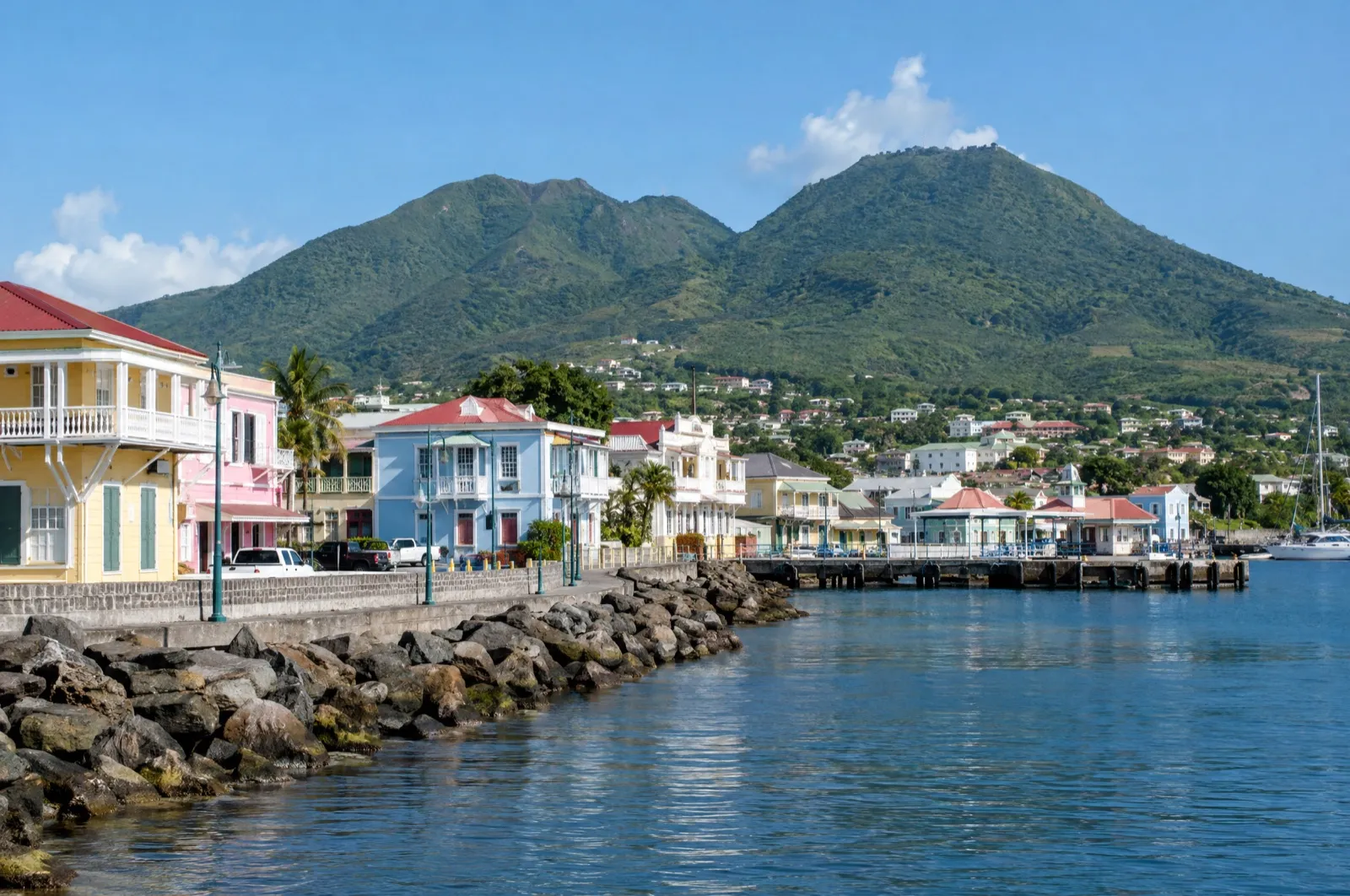
The unit lists the Sustainable Island State Contribution at US$250,000 for a main applicant or a family of up to four, with US$25,000 per additional dependant under 18 and US$50,000 per additional dependant aged 18 or over. The Public Benefit Option is also US$250,000. Real estate is US$325,000 for a condominium unit or share in a designated development or US$600,000 for a single-family home, held for at least seven years, with post-approval government fees of US$25,000 (main applicant), US$15,000 (spouse), US$10,000 (child under 18) and US$15,000 (dependant 18 or over).
Due diligence is US$10,000 for the main applicant and US$7,500 per dependant aged 16 or over. The unit’s page says that within 120 to 180 days of acknowledging a submission it will advise whether an application is approved in principle, denied or delayed for cause. Every main applicant is interviewed, virtually or in person.
Two 2026 changes matter. On 8 January 2026 the government announced that “the first measure will see the implementation of a residency feature for investors”, with biometric collection as the second; the unit’s contribution page still read “No mandatory travel or residency requirements” on 3 November 2026. The National Biometric Enrolment and Passport Modernisation Programme launched on 14 April 2026, and every citizen who obtained citizenship through the programme must enrol by 31 July 2027. Our St Kitts and Nevis guide sets out the fees per route.
What does Saint Lucia charge in 2026?
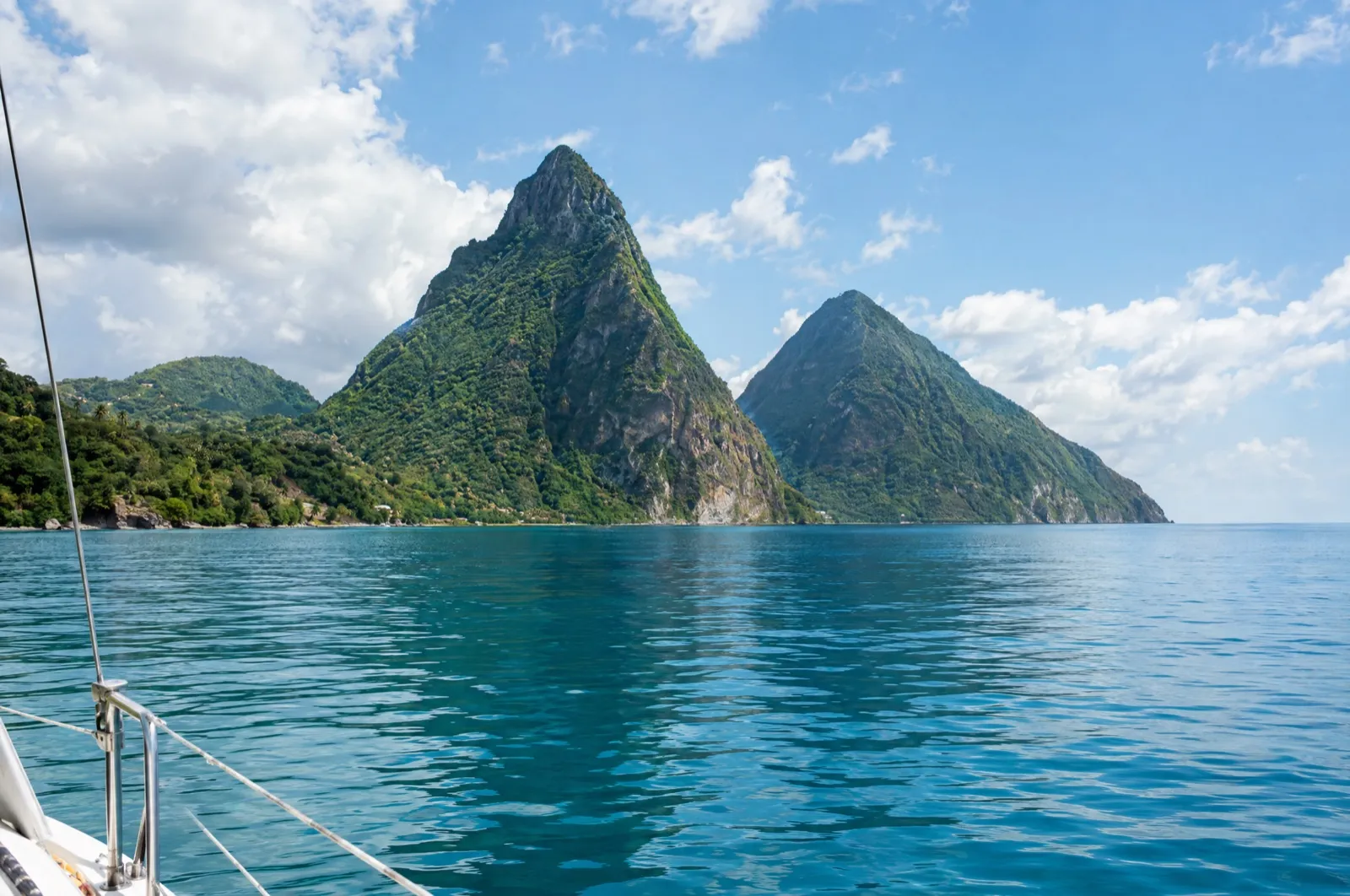
The National Economic Fund contribution is US$240,000 for an applicant with up to three qualifying dependants, then US$10,000 per extra dependant under 18 and US$20,000 per extra dependant over 18. Alternatives are US$300,000 in non-interest-bearing National Action Bonds held for five years (plus a US$50,000 administration fee), real estate of US$300,000 plus administration fees from US$30,000, or an enterprise project from US$3,500,000. S.I. No. 57 of 2026 added a built real estate route: US$500,000 in an approved completed project, plus a US$30,000 administration fee.
Application processing is US$2,000 for the main applicant and US$1,000 per dependant; due diligence is US$8,000 for the main applicant and US$5,000 per dependant over 16, as restated in S.I. No. 57 of 2026 (the FAQ page still shows an older US$7,500 figure). The FAQ states “it will take approximately ninety (90) days to the grant of citizenship” after acceptance for processing, and an interview and identity verification process has applied to main applicants since 4 September 2023.
Children up to 21 qualify, or up to 30 if fully supported, together with parents over 55 who are fully supported and unmarried siblings under 18. Act No. 22 of 2025 requires every applicant and dependant to comply with prescribed residency and genuine link requirements from 1 January 2026; the regulations we read prescribe no number of days. Our Saint Lucia guide covers each route.
How long do Caribbean applications really take?
Statutory and published targets sit at three to six months. Agent-reported timelines are longer. IMI Daily’s processing-time survey for the fourth quarter of 2025 recorded averages of 5.1 months for St Kitts and Nevis, 7 months for Grenada, 9.3 months for Dominica, 14.2 months for Antigua and Barbuda and about 18 months for Saint Lucia.
The European Commission reads the speed differently. Its Eighth Report under the Visa Suspension Mechanism (19 December 2025) notes that across the five programmes “the number of applications remains high, with 13,113 in 2023 and 10,573 in 2024” and that “processing times are short and rejection rates very low”, citing 2024 rejection rates of 1.7% in Antigua and Barbuda, 5.3% in Saint Lucia and 6.5% in Dominica. The same report estimates around 107,000 passports issued through the five schemes.
Why is Malta closed?
The Court of Justice of the European Union ruled on 29 April 2025 in Case C-181/23, Commission v Malta. Its press release states: “The acquisition of Union citizenship cannot result from a commercial transaction.” The Court held that by operating the 2020 investor citizenship scheme, “which amounts to the commercialisation of the grant of the nationality of a Member State and, by extension, of Union citizenship, Malta has infringed EU law.”
The ruling rests on Article 20 TFEU and the duty of sincere cooperation in Article 4(3) TEU. The scheme is closed, and the ruling makes any similar EU scheme unlawful. Spain closed its property-based residence route separately on 3 April 2025; that was a residence permit, not citizenship.
Residence by investment is a different product and remains open in several EU states. Our guides cover Portugal’s fund-based route, Greece’s property thresholds, including a draft 15% transfer tax for buyers who are tax resident outside the EU and EEA that is not yet law, and Italy’s investor visa.
What about Türkiye, Egypt, Jordan, Vanuatu and North Macedonia?

Türkiye grants exceptional citizenship for defined investments. The official text reproduced by the Konya Investment Support Office lists real estate of at least US$400,000 with a three-year no-sale annotation on the title (the floor rose from US$250,000 on 13 June 2022), or US$500,000 in fixed assets, a three-year bank deposit, government debt instruments, real estate or venture fund shares or private pension contributions, or employment of at least 50 people. None of the listed conditions is a period of residence.
Egypt pays contributions and deposits into a special account of its citizenship unit at the Central Bank of Egypt. Henley & Partners’ programme page lists a non-refundable US$250,000 treasury contribution, US$300,000 in state-owned real estate (saleable after five years), a US$350,000 business investment plus US$100,000 contribution, or a US$500,000 deposit refundable after three years without interest, and reports about 15 months of processing. We could not fetch an official Egyptian schedule.
Jordan publishes its terms through the Ministry of Investment. The HCR Law summary we read (October 2023) describes a US$1,000,000 non-interest deposit for three years plus US$1,000,000 in six-year treasury bonds, US$1,500,000 in Jordanian company shares held three years, or a project with paid capital of US$1,000,000 in Amman (US$750,000 outside it) creating at least 20 jobs in Amman or 10 outside it, with one month of residence before the final recommendation on the deposit route. Check current figures with the Ministry.
Vanuatu runs the Development Support Program under the Citizenship Act Cap. 112. Uglobal’s programme page lists US$130,000 for a single applicant, US$150,000 for a couple, US$165,000 with one child and US$180,000 with two children, plus a US$5,000 due diligence fee per family and no stay requirement. The EU removed Vanuatu from its Schengen visa-exemption list in December 2024.
North Macedonia allows citizenship for a “special economic interest” without prior residence; IMI Daily reports a EUR 400,000 business investment with ten jobs or a EUR 200,000 contribution to an approved fund. The Commission’s Eighth Report says the country “must abolish the scheme and repeal its legal basis”. Grants were marginal: one in 2023 and two in 2024.
What changes next
- 12 November 2026: the date by which, according to the Antigua and Barbuda Prime Minister on 24 October 2026, the government must commit to suspending its programme to keep Schengen visa exemption. A letter from Commissioner Brunner of 25 June 2026 asked Antigua to phase out by 1 June 2028. No decision had been published on 3 November 2026.
- Regional regulator: the ECCIRA Agreement of 18 September 2025 brings a residency and genuine link requirement and shared standards. Grenada’s 2026 Bill is the first national text we have read; Grenada deferred its 30-day rule on 21 August 2026 until the regulator operates and the states agree a start date. Our 2027 guide tracks each scheduled change.
- Dominica: 30 days of presence in the first five years and a flat 10% income tax from 1 January 2027 were announced on 4 August 2026; neither had been gazetted when we checked.
- St Kitts and Nevis: biometric enrolment of existing citizens runs to 31 July 2027; the residency feature announced on 8 January 2026 had no published start date.
- Argentina (added 26 October 2026): on 2 October 2026 the Economy Ministry announced a US$350,000 Treasury contribution or a US$800,000 bond subscription for a main applicant, with applications due to open in the fourth quarter of 2026; the programme rests on a 2025 decree a court declared null in one June 2026 case. See our dated note on the Argentina announcement.
- North Macedonia: the Interior Ministry proposed in June 2026 to remove the fixed thresholds; the Commission considers that insufficient.
- 3 November 2026: re-checked every source. We corrected the Antigua and Barbuda family rule (the US$230,000 contribution covers any family size; extra dependants add processing fees, not contribution), Dominica’s parent age (above 65, not any age) and the MOA signing account; removed an unofficial report of a 30-day Antigua Bill we could not find in an official text; and added Saint Lucia’s US$500,000 built real estate route, its residence duty, Grenada’s deferral and Dominica’s announced 30 days.
How we checked this
Figures come from the fee schedules, FAQ and dependants pages of the Antigua and Barbuda, St Kitts and Nevis and Saint Lucia units, Antigua’s Amendment Act of 2016, the gazetted regulations of Dominica (S.R.O. 8 of 2024), Grenada (S.R.O. 12 of 2024 and S.R.O. 34 of 2023) and Saint Lucia (S.I. No. 57 of 2026, with Act No. 22 of 2025), Grenada’s 2026 Bill and IMA Grenada’s Circular No. 2 of 2026, Dominica’s 2026/27 budget address, the OECS release of 22 June 2024, the CJEU press release of 29 April 2025 and the European Commission’s Eighth Report of 19 December 2025 with its staff working document, all read on 3 November 2026. Türkiye’s amounts are from an official gov.tr investment office page. Antigua’s 24 October statement and the Brunner letter are as reported by the Antigua Observer. Egypt, Jordan, Vanuatu and North Macedonia figures are attributed to the named firm or publication because we could not reach an official schedule; treat them as indicative until a licensed agent or lawyer confirms them.
Questions people ask
Which countries still offer citizenship by investment in 2026?
Five Caribbean states (Antigua and Barbuda, Dominica, Grenada, St Kitts and Nevis, Saint Lucia) run regulated programmes with published fee schedules. Türkiye grants citizenship for a US$400,000 property purchase or US$500,000 in other qualifying investments. Egypt, Jordan, Vanuatu and North Macedonia also operate routes, though their official schedules are harder to verify. Malta's scheme is closed.
What is the cheapest citizenship by investment programme in 2026?
Among programmes with a published government schedule, Dominica's Economic Diversification Fund contribution of US$200,000 for a single applicant is the lowest in the Caribbean, and it sits exactly on the regional floor agreed in 2024. Fees on top include US$7,500 due diligence, a US$1,000 processing fee, a US$1,000 interview fee and US$500 per naturalisation certificate, so about US$210,000 in government charges before agent fees.
Do I have to live in a Caribbean country to keep the citizenship?
Rules are tightening but most are not yet in force. Antigua and Barbuda's Act requires five days in the country during the five calendar years after registration. Saint Lucia's Act No. 22 of 2025 imposes a residency and genuine link duty from 1 January 2026 without a set number of days. Grenada's 30-day rule was deferred on 21 August 2026 until the regional regulator operates. Dominica announced 30 days in the first five years on 4 August 2026, and St Kitts and Nevis a residency feature on 8 January 2026; neither has a published start date.
Is Malta's citizenship by investment scheme still open?
No. On 29 April 2025 the Court of Justice of the European Union ruled in Commission v Malta (Case C-181/23) that Malta's 2020 investor citizenship scheme infringed EU law, holding that Union citizenship cannot result from a commercial transaction. The scheme is closed and no EU member state offers citizenship in exchange for a payment or investment.
How long does citizenship by investment take?
Published targets are short: Dominica's regulations give the unit three months from submission to decide, St Kitts and Nevis says it decides within 120 to 180 days of acknowledging a file, and Saint Lucia's FAQ says about 90 days from acceptance. Real waits reported by agents in late 2025 were longer, from about five months in St Kitts and Nevis to around 18 months in Saint Lucia, according to IMI Daily's processing-time survey.
Will the EU stop Caribbean citizenship by investment?
The EU has not closed any programme, but its revised visa suspension mechanism, in force since December 2025, treats the operation of an investor citizenship scheme as in itself a ground to suspend a country's Schengen visa exemption. A letter from Commissioner Brunner dated 25 June 2026 asked Antigua and Barbuda to phase out its programme by 1 June 2028, and on 24 October 2026 its Prime Minister said a suspension by 12 November 2026 was very likely. No decision had been published on 3 November 2026.