How much does Caribbean citizenship by investment cost in 2026, all fees included?
By Sanad Boughalmi, Co-founder, systems and international desk. Edited by Selma Setta. Published 26 October 2026, updated 4 November 2026. Figures checked 4 November 2026.

On each unit's published schedule, a single applicant pays about US$210,000 all-in through Dominica's fund, US$242,500 in Grenada, US$248,800 in Antigua and Barbuda, US$250,000 in Saint Lucia and US$260,250 in St Kitts and Nevis. A family of four pays US$251,000 (Grenada) to US$274,500 (Dominica), before agent fees. Real estate fees start at US$25,000; Antigua and Barbuda adds none.
| Dominica fund route, single applicant, all government fees | US$210,000 |
|---|---|
| Dominica fund route, family of four | US$274,500 |
| Antigua and Barbuda fund route, single applicant | US$248,800 |
| Saint Lucia fund route, single applicant | US$250,000 |
| St Kitts and Nevis fund route, single applicant (published fees) | US$260,250 |
| Grenada fund route, all per-person fees | US$242,500 single applicant; US$251,000 family of four (S.R.O. 12 of 2024, 20 of 2017, 34 of 2023) |
| Dominica real estate government fee, main applicant | US$75,000 |
| St Kitts and Nevis real estate minimum | US$325,000, held seven years |
What is included in the cost of a Caribbean citizenship application?

Every Caribbean programme charges in layers: the qualifying contribution or investment, a government fee on most real estate routes, due diligence per person, a processing or application fee, an interview fee in some countries, and small end-of-process charges for certificates and passports. Agents then add their own professional fee, which no unit publishes.
Since 1 July 2024 the five programmes share a floor. The OECS release of 22 June 2024 records that “the minimum price for any CBI options shall be US$200,000” and that “discounting of the agreed minimum price is illegal.” The figures below are each unit’s published schedule or gazetted regulations as read on 26 October 2026.
Two assumptions run through the family examples: the family is a main applicant, a spouse and two children aged 12 to 15, and only fees printed in the schedule are counted. Where a unit does not publish a fee, the table says so rather than guessing. Agent fees are excluded throughout. A licensed agent or lawyer can confirm the exact figure for a specific family.
How much does Dominica citizenship cost in 2026?
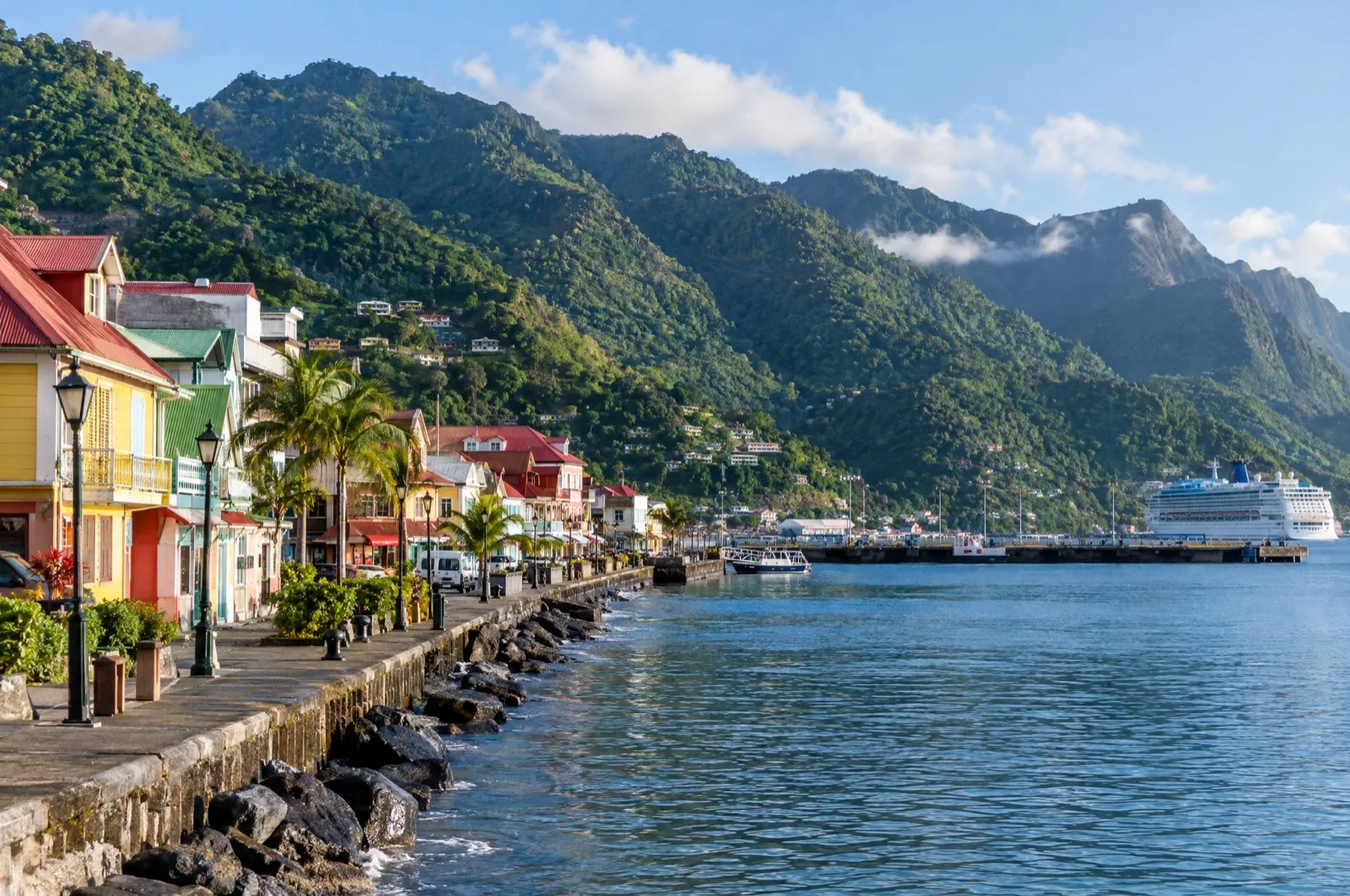
Dominica’s Citizenship by Investment Regulations, 2024 (S.R.O. 8 of 2024, gazetted 28 June 2024) set the direct contribution at US$200,000 for a main applicant and US$250,000 for a main applicant with up to three qualifying dependants. Each further dependant costs US$25,000 (under 18) or US$40,000 (18 or over).
Schedule 1 lists the fees payable on submission: “seven thousand five hundred United States dollars for due diligence background checks on the main applicant”, US$4,000 per dependant, a US$1,000 interview fee per interview, a US$1,000 processing fee per application, and US$500 per certificate of naturalisation.
| Dominica | Single applicant | Family of four |
|---|---|---|
| Fund contribution | US$200,000 | US$250,000 |
| Due diligence | US$7,500 | US$7,500 + 3 x US$4,000 = US$19,500 |
| Interview fee | US$1,000 | 2 x US$1,000 = US$2,000 (main applicant and spouse) |
| Processing fee | US$1,000 | US$1,000 |
| Certificates | US$500 | 4 x US$500 = US$2,000 |
| Total | US$210,000 | US$274,500 |
The family column follows the fund clause of Schedule 1, which charges due diligence “on each dependant” with no age limit. The Unit’s fund page charges it only on dependants aged 16 or over; on that reading the two children add nothing and the family pays US$266,500. The Unit interviews everyone aged 16 or over, so this family has two interviews.
The real estate option needs a minimum US$200,000 in an approved project plus government fees of US$75,000 (main applicant) or US$100,000 (main applicant and up to three dependants). Due diligence on the real estate route applies to dependants aged 16 or over only. A single buyer therefore pays about US$285,000 (US$200,000 of it in property) and a family of four about US$316,500: US$200,000 + US$100,000 + US$11,500 due diligence (main applicant and spouse) + US$2,000 for two interviews + US$1,000 processing + US$2,000 for four certificates. Passport fees are not in the regulations and are excluded.
How much does Antigua and Barbuda citizenship cost in 2026?
The unit’s Schedule of Fees puts the National Development Fund contribution at US$230,000, and its fund page asks for “the minimum sum of US$230,000 per application” for any family size, with spouse, children and parents over 55 included “with no additional NDF contribution required”. Processing is US$10,000 for one person and US$20,000 for up to four; the schedule describes the larger family charge as “$20,000 for a family of up to 4 persons with incremental payments of $10,000 for each additional dependent.”
Due diligence is US$8,500 for the principal applicant, US$5,000 for a spouse, nil for a child under 12, US$2,000 for a child aged 12 to 17 and US$4,000 for a dependant aged 18 to 30 or a parent aged 55 and over. Passports are US$300 per person.
| Antigua and Barbuda | Single applicant | Family of four |
|---|---|---|
| NDF contribution | US$230,000 | US$230,000 |
| Processing fee | US$10,000 | US$20,000 |
| Due diligence | US$8,500 | US$8,500 + US$5,000 + 2 x US$2,000 = US$17,500 |
| Passports | US$300 | US$1,200 |
| Total | US$248,800 | US$268,700 |
The real estate route is a minimum US$300,000 purchase held for five years, with the same processing, due diligence and passport fees: about US$318,800 for one person and US$338,700 for the family, most of it in a property. The University of the West Indies Fund at US$260,000 is listed as inclusive of processing fees for up to four people.
How much does Grenada citizenship cost in 2026?
Grenada’s S.R.O. 12 of 2024 (in force 1 July 2024) fixes the National Transformation Fund contribution at US$235,000 for a “Main Applicant and up to 3 dependants”, US$25,000 for each further dependant, and US$50,000 or US$75,000 for dependants under paragraphs (f) and (g) of the Act’s definition (certain parents, grandparents and siblings). There is no cheaper single-applicant tier.
The per-person fees sit in Schedule I of the principal regulations (S.R.O. 17 of 2013). S.R.O. 20 of 2017 replaced its processing and due diligence table: processing is US$1,500 each for the main applicant, spouse, children aged 17 to 25 and dependent parents aged 65 and over, and US$500 for a child aged 0 to 16; due diligence is US$5,000 for each of those adults and nothing for a child aged 0 to 16. S.R.O. 34 of 2023 added interview fees of US$1,000 each for the main applicant, spouse, children aged 17 and over and dependent parents. The 2013 schedule’s US$1,500 application fee is, in its own guideline, due to agents from the Government and “shall not be included with fees charged to applicants”, so it is left out.
| Grenada | Single applicant | Family of four |
|---|---|---|
| NTF contribution | US$235,000 | US$235,000 |
| Processing | US$1,500 | 2 x US$1,500 + 2 x US$500 = US$4,000 |
| Due diligence | US$5,000 | 2 x US$5,000 = US$10,000 (children none) |
| Interview fees | US$1,000 | US$2,000 (main applicant and spouse) |
| Total | US$242,500 | US$251,000 |
On the real estate route the 2024 regulations require US$270,000 per share in an approved tourism accommodation unit (bought by two or more investors, unit value at least US$440,000) or US$350,000 for a full approved project investment, plus a US$50,000 government contribution for a family of up to four. The same regulations require the developer to keep at least US$230,000 of each US$270,000 share for construction, which caps agent commissions paid out of the investment at US$40,000.
How much does St Kitts and Nevis citizenship cost in 2026?
The unit’s page states the Sustainable Island State Contribution is US$250,000 for a main applicant or a family of up to four, with US$25,000 per extra dependant under 18 and US$50,000 per extra dependant aged 18 or over. Due diligence is US$10,000 for the main applicant and US$7,500 for each dependant aged 16 or over.
The unit’s pages do not publish a passport fee. The gazetted 2024 regulations (S.R.O. 20 of 2024, regulation 25) set a processing fee of US$250 per applicant, so the totals below are published government fees only.
| St Kitts and Nevis | Single applicant | Family of four |
|---|---|---|
| SISC contribution | US$250,000 | US$250,000 |
| Due diligence | US$10,000 | US$10,000 + US$7,500 (spouse) = US$17,500 |
| Processing fee (regulation 25) | US$250 | US$1,000 |
| Passport fees | not published | not published |
| Published total | US$260,250 | US$268,500 |
Real estate is US$325,000 for a condominium unit or share in a designated development, or US$600,000 for a single-family home, and “shall not be resold for a period of at least seven (7) years.” Post-approval government fees are US$25,000 for the main applicant, US$15,000 for a spouse, US$10,000 per child under 18 and US$15,000 per dependant aged 18 or over. With due diligence and the US$250 processing fee per applicant, a single buyer of a condominium therefore pays US$360,250 (US$325,000 + US$25,000 + US$10,000 + US$250) and a family of four US$403,500 (US$325,000 + US$60,000 in post-approval fees + US$17,500 due diligence + US$1,000 processing), with US$325,000 of that in property.
How much does Saint Lucia citizenship cost in 2026?
The programme’s Investment Options page lists the National Economic Fund contribution at US$240,000 for an applicant with up to three qualifying dependants, then US$10,000 per extra dependant under 18 and US$20,000 per extra dependant over 18. Application processing is US$2,000 for the main applicant and US$1,000 per dependant. Due diligence is US$8,000 for the main applicant and US$5,000 per dependant over 16; the FAQ page still shows an earlier US$7,500 main-applicant figure, so confirm which applies. “Due diligence is only conducted on applicants above the age of 16 years.”
| Saint Lucia | Single applicant | Family of four |
|---|---|---|
| NEF contribution | US$240,000 | US$240,000 |
| Processing | US$2,000 | US$2,000 + 3 x US$1,000 = US$5,000 |
| Due diligence | US$8,000 | US$8,000 + US$5,000 (spouse) = US$13,000 |
| Total | US$250,000 | US$258,000 |
Real estate needs a US$300,000 purchase plus non-refundable administration fees of US$30,000 (applicant alone), US$45,000 (with spouse), US$5,000 per child and US$10,000 per adult dependant: about US$340,000 for one person and US$373,000 for the family. National Action Bonds of US$300,000 carry a US$50,000 administration fee, pay no interest and “must be registered and remain in the name of the applicant for a five-year holding period”. Passport fees are not listed.
Which Caribbean programme is cheapest overall?
| Fund route, all published fees | Single applicant | Family of four |
|---|---|---|
| Dominica | US$210,000 | US$274,500 |
| Grenada | US$242,500 | US$251,000 |
| Antigua and Barbuda | US$248,800 | US$268,700 |
| Saint Lucia | US$250,000 | US$258,000 |
| St Kitts and Nevis (published fees only) | US$260,250 | US$268,500 |
For one person Dominica is clearly lowest. For a family of four the order flips: Grenada is lowest at US$251,000, then Saint Lucia, and the spread to Dominica is US$23,500, because Dominica’s US$250,000 family tier and its US$4,000 per-dependant due diligence close the gap. St Kitts and Nevis likely costs more than its published total once passport fees are added.
Why do the real estate routes cost more than the donation?
Four of the five units charge a government fee on real estate in addition to the purchase: US$75,000 to US$100,000 in Dominica, US$50,000 in Grenada, US$25,000 plus family fees in St Kitts and Nevis, and administration fees from US$30,000 in Saint Lucia. Antigua and Barbuda charges no separate real estate fee: its Schedule of Fees lists the same processing fee on both routes, but sets the property minimum US$70,000 above its fund contribution.
The property can be sold after the holding period (five years in Antigua and Barbuda, seven in St Kitts and Nevis), so part of the outlay is recoverable. The non-refundable portion is usually comparable to, or larger than, the fund contribution. Whether that trade-off makes sense is a question for a licensed agent or lawyer, not for a lead-matching service.
What changes next
- 4 November 2026: we corrected three points against the primary texts. Grenada’s per-person fees are now added from S.R.O. 20 of 2017 and S.R.O. 34 of 2023 (US$242,500 single, US$251,000 family of four, which makes Grenada the cheapest family option); Antigua and Barbuda charges no separate government fee on real estate, so the summary no longer says every real estate route adds US$50,000 to US$100,000; and the National Development Fund’s US$230,000 is per application for any family size, not a family of up to four.
- 2 November 2026: we re-added the Dominica and St Kitts and Nevis totals from the regulations. Dominica’s family of four is US$274,500 by fund and US$316,500 by real estate (two interviews, not one), and the St Kitts and Nevis condominium totals now include the US$250 processing fee per applicant (US$360,250 single, US$403,500 family).
- 12 November 2026: Antigua and Barbuda’s Prime Minister said on 24 October 2026 that the five Caribbean governments must tell the European Commission by this date whether they will suspend their programmes. A suspension would stop new applications regardless of price.
- Regional regulator (ECCIRA): the agreement of 18 September 2025 adds biometrics and a residency requirement. Grenada’s 2026 amendment Bill and Antigua’s 30-day residency Bill (tabled 14 July 2026) had no gazetted commencement date when we checked. Fee schedules may be revised when they commence.
- St Kitts and Nevis: biometric enrolment of all programme citizens runs to 31 July 2027.
- Saint Lucia’s FAQ still carries a US$7,500 due diligence figure against US$8,000 on its Investment Options page; the unit may reconcile the two.
How we checked this
We read the fee schedules of the Antigua and Barbuda, St Kitts and Nevis and Saint Lucia units, the gazetted Dominica regulations (S.R.O. 8 of 2024) and Grenada regulations (S.R.O. 12 of 2024, S.R.O. 34 of 2023), and the OECS release of 22 June 2024, all on 26 October 2026. On 2 November 2026 we re-read Schedule 1 of the Dominica regulations and regulations 24 to 26 of S.R.O. 20 of 2024 with its amendment S.R.O. 43 of 2024, and re-added the Dominica and St Kitts and Nevis totals. On 4 November 2026 we read Schedule I of the Grenada regulations (S.R.O. 17 of 2013) with S.R.O. 20 of 2017, S.R.O. 34 of 2023 and S.R.O. 12 of 2024, and the Antigua and Barbuda unit’s Schedule of Fees, fund and real estate pages, and added the Grenada totals. Totals are arithmetic on those published lines only; agent fees, travel for interviews or oaths and any fee a unit does not publish are excluded and flagged where they apply.
Questions people ask
What is the cheapest Caribbean citizenship for a single applicant in 2026?
Dominica. Its 2024 regulations set the Economic Diversification Fund contribution at US$200,000 for a main applicant, with US$7,500 due diligence, a US$1,000 processing fee, a US$1,000 interview fee and a US$500 certificate fee, so about US$210,000 before agent fees. Grenada (US$242,500), Antigua and Barbuda (US$248,800) and Saint Lucia (US$250,000) follow.
Which Caribbean programme is cheapest for a family of four?
On published schedules, Grenada at about US$251,000 (US$235,000 contribution covering up to three dependants, plus per-person processing, due diligence and interview fees), then Saint Lucia at about US$258,000, St Kitts and Nevis at US$268,500 in published fees, Antigua and Barbuda at about US$268,700 and Dominica at US$274,500. The family is a main applicant, a spouse and two children aged 12 to 15.
Is the real estate route cheaper than the donation?
No. The property is an asset you may sell after the holding period (five years in Antigua and Barbuda, seven in St Kitts and Nevis), and four of the five units charge a separate government fee on top: US$75,000 to US$100,000 in Dominica, US$50,000 in Grenada, US$25,000 per main applicant plus family fees in St Kitts and Nevis, and US$30,000 to US$55,000 in Saint Lucia. Antigua and Barbuda charges the same processing fee on both routes but a higher minimum. Total outlay is higher; capital at risk is partly recoverable.
What are agent fees for Caribbean citizenship?
The units do not publish them and applications must go through a licensed or authorised agent. Grenada's 2024 regulations cap what a developer may release for commissions from a US$270,000 real estate share at US$40,000. Ask any agent for a written breakdown separating government fees from professional fees before paying a deposit.
Are there hidden costs after approval?
Passport fees (US$300 per person in Antigua and Barbuda), certificate fees (US$500 each in Dominica), oath or interview travel, and in St Kitts and Nevis mandatory biometric enrolment for all citizens of the programme by 31 July 2027. Dominica also charges US$75,000 to add a spouse married after the original application.