What are Greece's golden visa thresholds in 2026: EUR 800,000, 400,000 or 250,000?
By Sanad Boughalmi, Co-founder, systems and international desk. Edited by Selma Setta. Published 26 October 2026, updated 2 November 2026. Figures checked 2 November 2026.
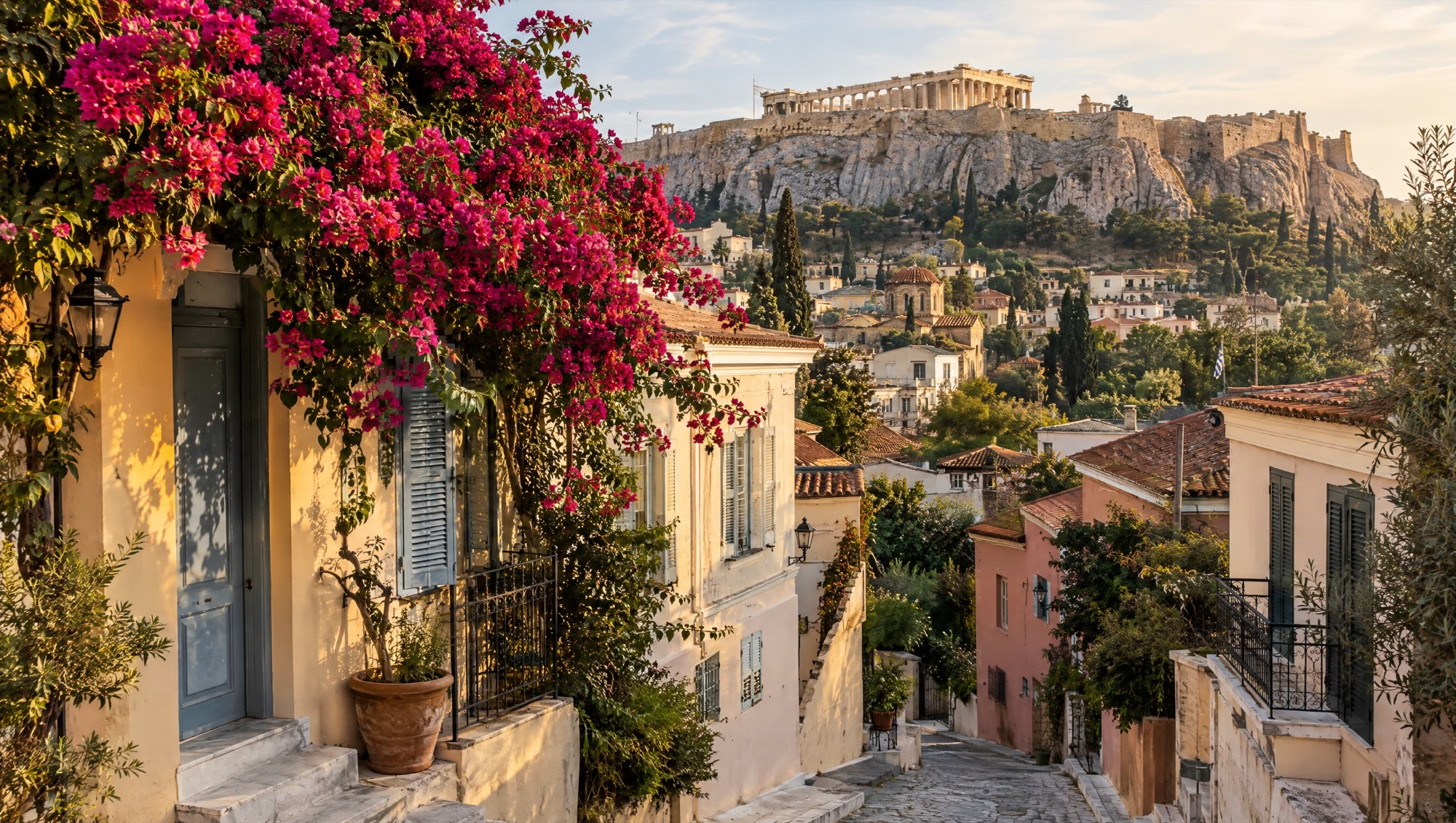
Since 5 April 2024 Greece's investor permit needs one property of at least EUR 800,000 in Attica, the Thessaloniki regional unit, Mykonos, Santorini and islands over 3,100 inhabitants, or EUR 400,000 elsewhere, each with at least 120 square metres of main areas. EUR 250,000 applies only to a completed residential conversion or a listed building under restoration. Short lets are banned, with a EUR 50,000 fine.
| Attica, Thessaloniki, Mykonos, Santorini, islands over 3,100 people | EUR 800,000 |
|---|---|
| Threshold elsewhere in Greece | EUR 400,000 |
| Conversion to residential use or listed-building restoration | EUR 250,000, no size minimum |
| Minimum size (800,000 and 400,000 tiers) | 120 square metres of main areas, one property |
| Short-term letting | Prohibited; revocation and a EUR 50,000 fine |
| Permit duration | Five years, renewable for equal periods while the property is held |
| Investor permits in force, September 2026 | 35,857 (27,602 initial, 8,255 renewed), per the Ministry |
| Pending golden visa files, September 2026 | 25,970 (6,962 investors, 19,008 family members) |
| Transfer tax, non-EU/EEA tax resident buying a home (draft, not law) | 15% for final contracts from 1 July 2027, per the draft put to consultation 18 October 2026 |
What changed in Greece’s golden visa in 2024?
Greece’s permanent investor residence permit (the type B.5 permit, known as the golden visa) sits in Article 100 of the Migration Code, Law 5038/2023. Article 64 of Law 5100/2024, published in the Government Gazette (A’ 49) on 5 April 2024, rewrote the thresholds. The Ministry of Migration and Asylum then issued Circular 9 on 24 September 2024 to explain how the regions, the size rule and the new prohibitions apply.
Before April 2024 most of Greece qualified at EUR 250,000. After it, the general entry point doubled or more than tripled depending on the map, a minimum floor area appeared, and short-term letting of permit properties was banned. The IBA’s September 2026 review notes that the transitional period has largely closed, so applications filed in 2026 face the full thresholds.
Kestrel Global connects people researching residence programmes with licensed firms. It does not advise. A Greek lawyer can confirm which tier a given property falls into and whether a transitional right still applies.
Where does the EUR 800,000 threshold apply?

The Ministry’s circular sets out the high tier. For “την Περιφέρεια Αττικής, την Περιφερειακή Ενότητα Θεσσαλονίκης της Περιφέρειας Κεντρικής Μακεδονίας, τις Περιφερειακές Ενότητες Μυκόνου και Θήρας της Περιφέρειας Νοτίου Αιγαίου” and for islands with a population above 3,100 at the last census, the minimum acquisition value “καθορίζονται σε οκτακόσιες χιλιάδες (800.000) ευρώ”.
In plain terms, EUR 800,000 applies to:
- the whole Attica region (Athens, Piraeus and their suburbs);
- the Thessaloniki regional unit;
- the Mykonos and Thira (Santorini) regional units;
- every island with more than 3,100 inhabitants at the last census.
The circular adds a point many buyers miss: “η Εύβοια συνιστά νησιωτική περιοχή” and falls under the EUR 800,000 limit, even though Evia is joined to the mainland by bridge. The same threshold applies to the total contractual rent under long-term tourist accommodation lease contracts in those areas.
Where does the EUR 400,000 threshold apply?
Everywhere else. The circular states that for “τις λοιπές περιοχές της χώρας” the minimum acquisition value, and the total rent for qualifying lease contracts, “καθορίζονται σε τετρακόσιες χιλιάδες (400.000) ευρώ”. That covers mainland Greece outside Attica and the Thessaloniki regional unit, Crete’s main cities excepted only where the island rule does not catch them (Crete has far more than 3,100 inhabitants and therefore falls in the EUR 800,000 tier), and smaller islands below the population line.
Both the EUR 800,000 and EUR 400,000 tiers carry two structural conditions:
- One property. The circular says the restriction that the minimum value concerns “ένα μόνο ακίνητο” now extends to all cases. Buyers can no longer add up several flats to reach the threshold.
- 120 square metres. For built property, or land with a building permit, the law requires a minimum “επιφάνεια κύριων χώρων εκατόν είκοσι (120) τετραγωνικών μέτρων”, main areas of at least 120 square metres. Storage rooms and parking spaces bought under the same deed in the same building do not count towards the 120 square metres, though their price can count towards the investment value. The size rule does not apply to unbuilt land without a permit.
For undivided co-ownership, each co-owner’s share must itself meet the applicable threshold, per EY’s summary of the law.
When does the EUR 250,000 threshold still apply?
Two cases, both in Article 100(2):
Change of use to residential (paragraph (c)). A property whose main areas are converted to housing qualifies at “διακόσιες πενήντα χιλιάδες (250.000) ευρώ”. The circular requires the change of use to have been completed after Article 64 of Law 5100/2024 took effect, “ήτοι από τις 05.04.2024 και εντεύθεν”, and before the permit application is filed. The conversion may be done by the buyer or the seller. Former industrial buildings qualify if no industry has operated there for at least five years. The 120 square metre rule does not apply, but it must still be a single property, and the converted property may not be used as a company seat or branch.
Listed building restoration (paragraph (d)). A property consisting of, or containing, a listed building to be restored or reconstructed also qualifies at EUR 250,000, with no size minimum. The catch is enforcement at renewal: the circular says full restoration or total reconstruction is an additional condition for the first renewal of the permit, and that transferring the property before restoration is complete is void. The IBA review reports an administrative fine of EUR 150,000 where the building is not restored.
Each property can be used once at the EUR 250,000 rate; the aim is to channel capital into stock that is not currently housing.
Can I rent the property out?

Long-term, yes. Short-term, no. Law 5100/2024 added paragraph 7A to Article 100: properties acquired in full ownership and possession for the initial grant or renewal of an investor permit “απαγορεύεται να εκμισθώνονται βραχυχρόνια στο πλαίσιο της οικονομίας του διαμοιρασμού, καθώς και να υπεκμισθώνονται”. Short-term letting through sharing-economy platforms and subletting are both prohibited.
The sanction in the consolidated law is revocation or non-renewal of the permit and “αυτοτελές διοικητικό πρόστιμο ύψους πενήντα χιλιάδων (50.000) ευρώ”, a standalone administrative fine of EUR 50,000. The IBA notes the rule is not retroactive for properties bought before it took effect. The circular defines short-term letting as a lease or sublease of a property for a specific period of less than 60 days, with no services other than accommodation and bed linen, whether or not it is listed on a digital platform.
How long does the permit last and who can come?
Article 100(1) grants the permit “για πέντε (5) έτη, με δυνατότητα ανανέωσης”, five years with the possibility of renewal, and paragraph 4 renews it “για ισόχρονη διάρκεια κάθε φορά”, for an equal period each time, as long as the property remains in the holder’s ownership and possession. There is no minimum stay in Greece attached to the investor permit.
Family members join under the Code’s family provisions: the Ministry’s own statistical appendix explains that the investor “μπορεί να συνοδεύεται και από τα μέλη της οικογένειας του”, who are granted their own residence permits. Family members receive a family reunification permit that expires with the investor’s. The Ministry’s September 2026 tables count 56,274 initial family-member permits in force alongside the investors’ permits, so families outnumber principal investors two to one.
Is there a route that does not involve property?
Yes, under a different article. Article 99 of the Migration Code creates a separate investment-activity permit (type B.4) for third-country nationals. Its routes include EUR 350,000 in units of a qualifying mutual fund or alternative investment fund; EUR 500,000 in a term deposit with a Greek bank, Greek government bonds with at least three years left to run, or shares and bonds bought at issue on a Greek regulated market; and EUR 800,000 in listed shares or bonds bought on the market. The permit is “πενταετούς διάρκειας” (five years) and renewed for an equal period each time while the investment is held. Each route has its own custody and certification rules, which a licensed lawyer can confirm.
Neither permit is citizenship. The Interior Ministry’s naturalisation procedure page, last updated on 1 October 2026, requires an applicant to have lived in Greece “νόμιμα και μόνιμα για επτά (7) έτη” (legally and permanently for seven years) before applying, and lists both the permit for investment activity and the permanent investor residence permit among accepted titles. The application fee is EUR 550, and naturalisation also tests integration into Greek economic and social life.
How many permits is Greece issuing in 2026?
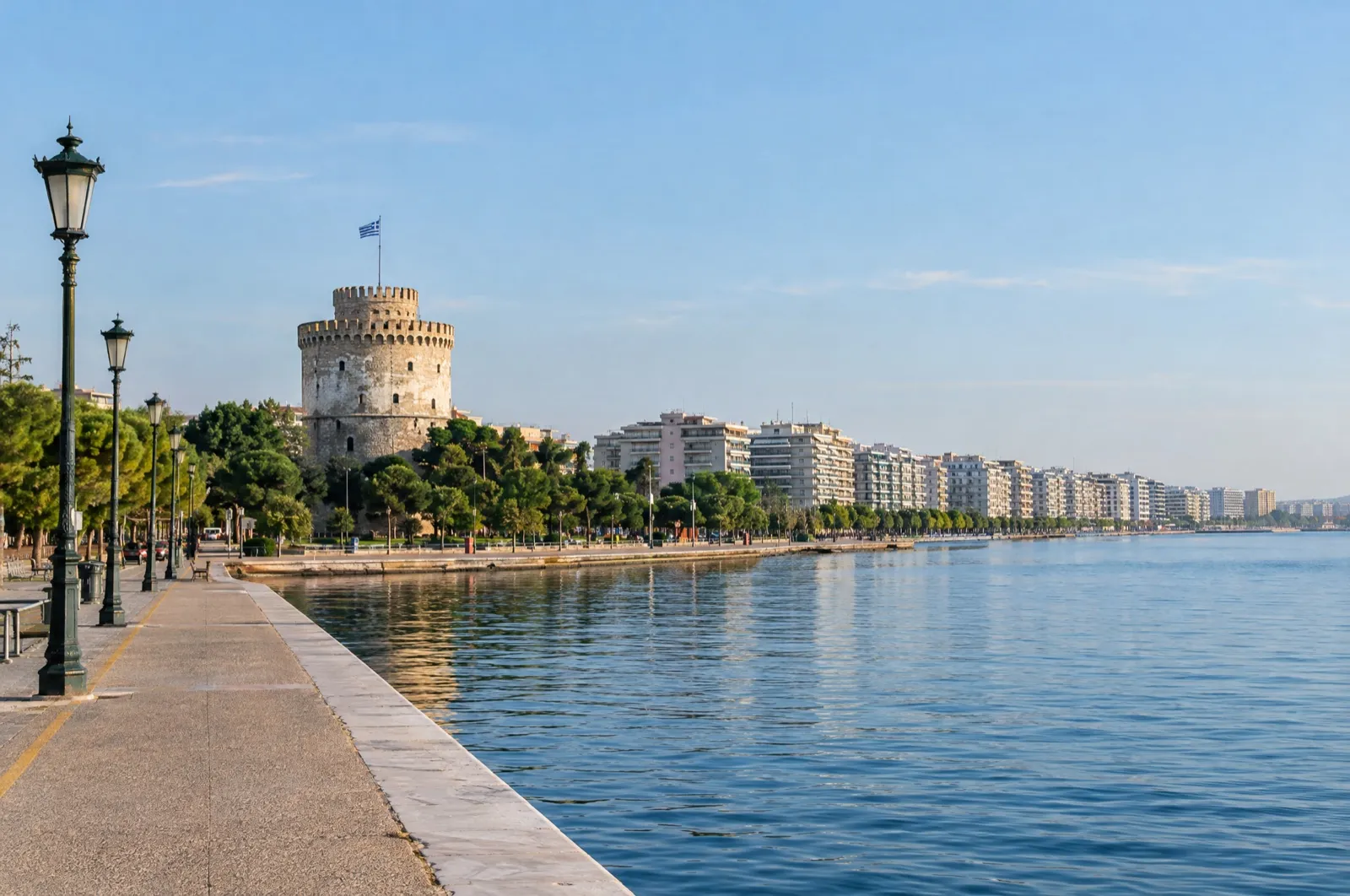
The Ministry of Migration and Asylum publishes a monthly legal migration appendix with golden visa tables. The September 2026 edition reports:
- 27,602 initial investor permits in force and 8,255 renewed or reissued, a total of 35,857 investor permits. Chinese nationals hold 47.4% of the initial permits and Turkish nationals 19.6%.
- 13,918 investor decisions issued between September 2025 and September 2026 (11,454 initial grants and 2,464 renewals), with monthly output ranging from 670 to 1,443.
- 25,970 pending files at the end of September 2026: 6,962 investor applications and 19,008 family-member applications. Of the investor files, 1,476 date from 2024, 1,829 from 2025 and 3,435 from 2026.
Three months earlier, at the end of June 2026, the same tables showed 32,702 investor permits in force and 32,532 pending files, of which 8,977 were investor applications.
IMI Daily’s analysis of the same Ministry data, published 27 August 2026, puts new investor applications at 3,086 for January to July 2026, down 39% from 5,028 in the same months of 2025, and the combined backlog at 29,273 at the end of July 2026 against more than 52,000 at the start of 2025. Demand fell after the thresholds rose; decisions have exceeded new filings since spring 2025.
What taxes should a golden visa buyer expect?
Three items recur. First, real estate transfer tax on purchase: Article 27(1) of the Property Tax Code (Law 5219/2025) states the tax on transfer of ownership or a real right “υπολογίζεται σε τρία τοις εκατό (3%)” of the taxable value. New-build sales by developers may instead carry VAT, depending on the property’s permit date and the developer’s status. Second, the annual property tax, ENFIA, which depends on location, size and age. Third, income tax on any long-term rent.
That 3% may not hold for every buyer. Article 16 of a draft law put to public consultation by the Ministry of National Economy and Finance from 18 October to 1 November 2026 would add a paragraph 1A to Article 27: where a home is bought by an individual who, when the tax falls due, “είναι φορολογικός κάτοικος χώρας εκτός της Ευρωπαϊκής Ένωσης και του Ευρωπαϊκού Οικονομικού Χώρου”, the transfer tax “υπολογίζεται σε δεκαπέντε τοις εκατό (15%)” of the home’s taxable value. The test is tax residence, not nationality. Article 48(8) applies it to final contracts signed from 1 July 2027. The draft text sets no value threshold and no exemption for golden visa purchases. It is a draft, not law, and may change before Parliament votes.
Rates, exemptions and the municipal surcharge on transfer tax vary with the property and the buyer. A Greek tax adviser or lawyer can confirm the figures for a specific purchase; Kestrel Global does not give tax advice.
What changes next
- Draft transfer tax (2 November 2026): the Ministry of National Economy and Finance’s draft law “Ενίσχυση του διαθέσιμου εισοδήματος, της αποταμίευσης και των επενδύσεων”, in public consultation on opengov.gr from 18 October to 1 November 2026, sets 15% transfer tax on homes bought by individuals tax resident outside the EU and EEA, for final contracts from 1 July 2027 (Articles 16 and 48(8)). The Government had announced the measure on 7 September 2026 as applying to non-EU citizens; the draft uses tax residence instead. The consultation has closed; the bill has not yet been passed, and Article 27 still reads 3%. Our update of 2 November 2026 sets out the draft text.
- Family members (6 February 2026): Article 29 of Law 5275/2026 (Gazette A’ 17) amended Article 95(2) of the Migration Code so investors can also be accompanied by adult children who lack legal capacity and live with and are supported by them.
- Portfolio category for long-term letting: the National Housing Strategy 2026 to 2035, approved on 23 July 2026 and published as Circular 1/2026 in Gazette B’ 5200 on 17 August 2026, proposes a new golden visa category built on portfolios of homes let long term. The IBA notes it is not in force and needs legislation and implementing decisions.
- Backlog (28 October 2026): the Ministry’s September 2026 appendix shows pending investor files down to 6,962 from 8,977 in June, with 2026 filings now the largest single year in the queue.
- Transitional rights: the 31 December 2024 completion deadline for the old regime (with a 10% deposit) has passed; only renewals of pre-2024 permits rely on preserved rights.
- Listed-building files: first renewals of EUR 250,000 restoration permits granted from 2024 fall due from 2029 and will test the full-restoration condition.
How we checked this
We read the Ministry of Migration and Asylum’s Circular 9 of 24 September 2024 on Article 100 of Law 5038/2023 as amended by Law 5100/2024, the consolidated Greek text of Article 100, the Ministry’s Legal Migration appendices for June and September 2026 (Tables 12 to 17), Article 29 of Law 5275/2026, the Government’s 7 September 2026 specification of the Thessaloniki Fair measures, EY’s April 2024 alert on Law 5100/2024, the IBA’s review of 9 September 2026 and IMI Daily’s data analysis of 27 August 2026. First checked on 26 October 2026; re-checked against the primary sources on 28 October 2026. On 2 November 2026 we read Articles 16 and 48 of the draft law in the Ministry of National Economy and Finance’s consultation on opengov.gr, re-read Article 27 of Law 5219/2025 (still 3%), and read Article 99 of the Migration Code and the Interior Ministry’s naturalisation page on mitos.gov.gr. We did not read the draft’s regulatory impact assessment. Greek quotations are from the Ministry circular, the law texts, the draft law and the naturalisation page; English renderings are ours.
Questions people ask
What is the minimum investment for a Greece golden visa in 2026?
EUR 800,000 for a property in the Attica region, the Thessaloniki regional unit, the Mykonos and Thira (Santorini) regional units, and any island with more than 3,100 inhabitants at the last census; EUR 400,000 anywhere else. Both tiers require a single property with at least 120 square metres of main areas. The Ministry's circular confirms Evia counts as an island and falls in the EUR 800,000 tier.
Can I still get a Greek golden visa for EUR 250,000?
Only in two narrow cases set by Article 100(2)(c) and (d) of the Migration Code: a property whose main areas have been converted to residential use, with the change of use completed after 5 April 2024 and before the application, or a listed building to be restored or reconstructed. No 120 square metre rule applies to these, but the listed building must be fully restored before the first five-year renewal.
Can I rent out a Greek golden visa property on Airbnb?
No. Article 100(7A), added by Law 5100/2024, prohibits short-term letting in the sharing economy and subletting of properties acquired for the investor permit. Breach leads to revocation or non-renewal of the permit and an administrative fine of EUR 50,000. Long-term letting is not banned. Converted properties also may not be used as a company seat or branch.
How long is the Greek golden visa valid and can my family join?
The permit is granted for five years and renewed for equal periods each time, provided the investor still owns and possesses the property. The Migration Code allows the investor to be accompanied by family members, who receive their own permits. There is no minimum stay requirement attached to the investor permit.
Does Greece offer investor residence without buying property?
Yes, under a separate permit. Article 99 of the Migration Code (type B.4) lists routes from EUR 350,000 in qualifying mutual funds or alternative investment funds, through EUR 500,000 in a term deposit, Greek government bonds or new share and bond issues, to EUR 800,000 in listed shares or bonds bought on the market. The permit lasts five years and is renewed for equal periods while the investment is held. A licensed lawyer can confirm which route fits a case.
Can a Greek investor permit lead to citizenship?
It can count towards it. The Interior Ministry's naturalisation page, last updated on 1 October 2026, requires seven years of legal and permanent residence in Greece before applying and lists both the permit for investment activity and the permanent investor residence permit among accepted titles. Naturalisation also tests integration into Greek economic and social life, so a permit alone is not enough. A Greek lawyer can confirm how it is assessed.
How long does the Greek golden visa take in 2026?
The Ministry publishes monthly data rather than a service standard. Its September 2026 report shows 25,970 pending golden visa files (6,962 investors and 19,008 family members) and 13,918 investor decisions issued in the 13 months to September 2026. Pending investor files fell from 8,977 at the end of June; files lodged in 2026 now make up about half of the investor queue.
What taxes apply when buying a golden visa property in Greece?
The buyer pays real estate transfer tax, which the Property Tax Code (Law 5219/2025, Article 27) sets at 3% of the taxable value, plus notary, land registry and legal costs. A draft law put to public consultation from 18 October to 1 November 2026 would charge 15% when an individual who is tax resident outside the EU and EEA buys a home, for final contracts from 1 July 2027. It is a draft, not law. Owners then pay the annual property tax, ENFIA. A Greek tax adviser or lawyer can confirm the figures for a specific purchase.