Dominica citizenship by investment in 2026: costs, rules and what changes
By Sanad Boughalmi, Co-founder, systems and international desk. Edited by Selma Setta. Published 27 October 2026, updated 2 November 2026. Figures checked 2 November 2026.

Dominica grants citizenship for a US$200,000 Economic Diversification Fund contribution (single applicant) or US$250,000 for a family of up to four, or US$200,000 in approved real estate plus US$75,000 to US$100,000 in government fees. Add US$7,500 due diligence, US$1,000 per interview for everyone aged 16 or over and US$1,000 processing. The Unit must answer within three months.
| Economic Diversification Fund, single applicant | US$200,000 (Schedule 1, S.R.O. 8 of 2024) |
|---|---|
| Economic Diversification Fund, main applicant and up to three dependants | US$250,000; extra dependant US$25,000 (under 18) or US$40,000 (18 or over) |
| Real estate minimum and holding period | US$200,000 in an Approved Project; not resold for three years from the grant of citizenship |
| Real estate government fees, payable on approval in principle | US$75,000 main applicant; US$100,000 with up to three dependants; US$25,000 or US$40,000 per extra dependant |
| Due diligence, interview, processing and certificate fees | US$7,500 main applicant; US$4,000 per dependant aged 16 or over; US$1,000 per interview; US$1,000 per application; US$500 per certificate |
| Decision window (regulation 8) | Approved in principle, delayed for cause or denied within three months of submission |
| Stay requirement (budget address, 4 August 2026) | At least 30 days in Dominica during the first five years of citizenship; no start date gazetted |
| Income tax from 1 January 2027 (announced, not yet law) | Flat 10% on income earned in Dominica above the EC$30,000 personal allowance |
How does Dominica citizenship by investment work in 2026?
Dominica has run a citizenship by investment programme since 1993. The current rules are the Commonwealth of Dominica Citizenship by Investment Regulations, 2024 (S.R.O. 8 of 2024), gazetted on 28 June 2024; the Unit’s legislation page says they “came into effect immediately” and repealed the earlier regulations. They have been amended once since: the Citizenship by Investment (Amendment) Regulations, 2025 (S.R.O. 46 of 2025), gazetted on 27 November 2025, which changes the rule on registering children born or adopted after citizenship and leaves every contribution and fee unchanged.
There are two routes: a contribution to the Economic Diversification Fund, or the purchase of a unit in an Approved Project. Every file goes through an Authorised Agent; the Unit’s FAQ is plain: “No. You must submit your application through an Authorised Agent.” The figures below are the gazetted regulations and the Unit’s own pages as read on 27 October 2026. Agent fees are not published and are left out throughout.
How much is the Economic Diversification Fund contribution?
Schedule 1 of the 2024 regulations sets the direct monetary investment at US$200,000 “for the main applicant” and US$250,000 “for a main applicant and up to three qualifying dependants”. Each additional dependant costs US$25,000 if under 18 and US$40,000 if 18 or over. The Unit’s fund page repeats the same four lines.
A dependant is a spouse; a child under 18; a child aged 18 to 30 in full-time higher education and fully supported by the main applicant or spouse; an unmarried daughter under 25 living with and fully supported by them; a child aged 18 or over who is physically or mentally challenged; or a parent or grandparent over 65 who is substantially supported. A spouse married after the original application can be added later for US$75,000 plus fees.
A child under 18 born to or adopted by the main applicant after citizenship can also be registered. The 2024 text allowed this only “not more than five years after the main applicant obtained citizenship”; S.R.O. 46 of 2025 deletes those words from paragraph 3(1) of Schedule 1, so the five-year limit no longer applies. The registration fees in paragraph 3(2) are unchanged: US$2,000 processing, US$4,000 due diligence for a child aged 16 or over and US$500 per certificate of naturalisation.
The contribution is non-refundable and is paid after approval in principle, not before. Regulation 8(2) gives the main applicant 30 days from the approval letter to show that “the full investment has been deposited with the Government of the Commonwealth of Dominica” and that all government fees have been paid. Euros and pounds are accepted, but a payment that converts to less than the US dollar minimum is rejected, and bank charges are on the applicant.
What does the real estate option cost and how long must I hold it?
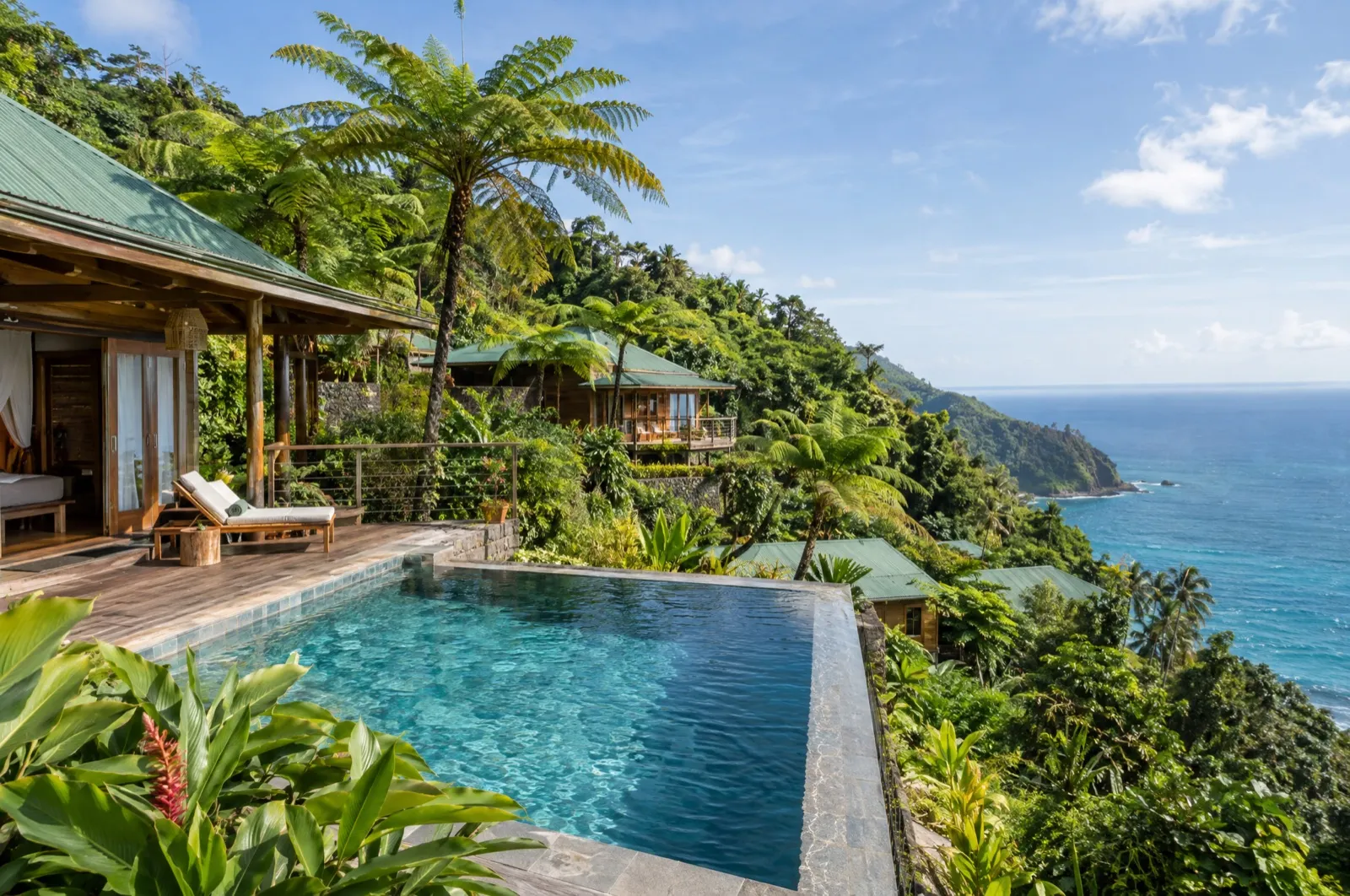
The minimum is US$200,000 per main applicant in an Approved Project, a development approved by Cabinet. The money must sit in an irrevocable escrow account and the project must have been deemed to have commenced before the Unit will consider the file.
On approval in principle the government fees fall due: US$75,000 for the main applicant, US$100,000 for a main applicant and up to three dependants, then US$25,000 per extra dependant under 18 and US$40,000 per extra dependant aged 18 or over.
The holding period is three years. Regulation 7(3) says qualifying real estate “shall not be resold unless a period of at least three years has elapsed from the grant of citizenship”, and regulation 7(4) blocks the same property from backing another citizenship application for five years. Selling early revokes the citizenship, bars the seller from the programme and voids the sale (regulation 7(6)).
What are the due diligence, interview and processing fees?

Both routes carry the same per-person fees. Schedule 1 charges US$7,500 “for due diligence background checks on the main applicant”, US$4,000 per dependant (the Unit’s pages and the real estate clause apply this to dependants aged 16 or over), US$1,000 “interview fee per interview”, US$1,000 “processing fee per application” and US$500 per certificate of naturalisation. Applicants from a specified country or region pay enhanced due diligence fees in place of the standard ones.
The interview has been mandatory since 2023. The Unit’s notice of 19 December 2023 says the consolidated regulations “introduce powers that reflect existing policies”, including “the mandatory interview requirements”, and that “the $1,000 fee for the mandatory interview is now enshrined in the Regulations”. Regulation 4(10) now reads that “every applicant shall attend an interview virtually or in person”. The Unit applies it to everyone aged 16 or over, held virtually in the applicant’s own language; agents and promoters cannot attend in their place.
What does the full bill look like?
The family below is a main applicant, a spouse and two children under 16. Only published government lines are counted.
| Route (published government lines only) | Single applicant | Family of four |
|---|---|---|
| Economic Diversification Fund | US$200,000 + US$7,500 + US$1,000 + US$1,000 + US$500 = US$210,000 | US$250,000 + US$11,500 + US$2,000 + US$1,000 + US$2,000 = US$266,500 |
| Approved Project real estate | US$200,000 + US$75,000 + US$7,500 + US$1,000 + US$1,000 + US$500 = US$285,000 | US$200,000 + US$100,000 + US$11,500 + US$2,000 + US$1,000 + US$2,000 = US$316,500 |
The family lines are the contribution or property plus government fee, due diligence on the main applicant and spouse, two interviews, one processing fee and four certificates. One wording point: the fund clause of Schedule 1 charges US$4,000 “for due diligence background checks on each dependant” with no age limit, while the Unit’s fund page says “US$4,000 for any dependants aged 16 or above”. Read literally, the regulation adds US$8,000 for the two children and gives US$274,500 (US$250,000 + US$19,500 due diligence + US$2,000 for two interviews + US$1,000 + US$2,000), the figure in our Caribbean citizenship by investment costs comparison. A licensed agent or lawyer can confirm which the Unit charges.
On the real estate route the property is an asset you can sell after three years; everything else in the row is a fee. Legal fees, stamp duty, bank charges and passport fees are excluded.
How long does the Unit take to decide?
Regulation 8(1) sets one clock: “Within three months of the submission of an application for Citizenship by Investment the Unit shall notify the Authorised Agent” whether the file is approved in principle, “delayed for cause and is still being processed”, or denied. The Unit’s FAQ says applicants “are generally expected to wait at least three months” for approval in principle, and its investment options page puts the whole process at three to six months.
After approval in principle the applicant has 30 days to make the investment and pay the fees, then receives the certificate of naturalisation. Agent-reported timelines for the five Caribbean programmes run longer than the statutory targets; our pillar on citizenship by investment programmes in 2026 tracks them.
What is the 30-day stay requirement announced in August 2026?
On 4 August 2026 the Minister for Finance presented the 2026/2027 budget address to the House of Assembly. The passage on the programme refers to the Eastern Caribbean Citizenship by Investment Regulatory Authority Act, which Parliament passed in October 2025, and lists what new citizens are required to do: “establish a genuine link to the country”, “be physically present in Dominica for at least 30 days during the first five years after receiving citizenship”, and “participate in approved integration programmes”.
What the address does not give is a start date, a procedure, or whether existing citizens are covered. As of 27 October 2026 nothing has been gazetted, and the Unit’s FAQ still reads “You do not have to reside in Dominica before or after citizenship is granted.” IMI Daily’s 23 September 2026 review reports that the rule “does not apply until the regulator begins work”, and that the regional authority starts 30 days after the fifth participating state deposits its instrument of ratification. Dominica’s commencement order for the authority’s enabling Act, S.R.O. 14 of 2026, was gazetted on 23 July 2026.
The budget wording above comes from a full-text copy of the address published by EmoNews on 5 August 2026, because the Government’s own pressroom refuses automated requests. In June 2026 the Prime Minister was reported by IMI Daily as saying that citizens “will have to come to Dominica to receive and renew your passport”; the address itself does not mention passports.
What does the flat 10% income tax from 2027 mean?
The same address proposes “that effective January 1, 2027, the Government will replace the income tax rates of 15%, 25% and 35% with a single, flat rate of 10 percent”, with “those earning $30,000 or less” continuing to pay no personal income tax (East Caribbean dollars). From the same date “residents and non-residents will be liable to pay income tax only on income earned in Dominica”, which ends the taxation of worldwide income.
Two cautions. First, these are budget proposals: IMI Daily noted on 2 September 2026 that the amending legislation had not reached the gazette, and we found none by 27 October 2026. Second, the Unit’s FAQ already reads that there is “no wealth, gift, inheritance, foreign income, or capital gains tax in Dominica” and that a citizen “would be liable to pay personal tax if you resided in Dominica”. Kestrel Global is not a tax adviser; a licensed agent or lawyer can confirm what the change means for someone who moves to the island.
Why do the regional floor and the European Commission matter?
Since 1 July 2024 the five Eastern Caribbean programmes share a floor. The OECS release of 22 June 2024 states that “the minimum price for any CBI options shall be US$200,000” and that “discounting of the agreed minimum price is illegal.” Dominica’s single-applicant contribution sits exactly on that floor, and Schedule 2 of its own regulations prohibits any claim that citizenship is available “at investment costs that are lower than the minimum amount”.
The European Commission’s Eighth Report under the Visa Suspension Mechanism (19 December 2025) estimates “around 107,000 passports” issued across the five programmes, records 13,113 applications in 2023 and 10,573 in 2024, and cites Dominica’s 2024 rejection rate of 6.5% as a sign that due diligence is thin. It calls the programmes’ continued operation “a persistent and serious security concern”. The five governments’ response, the Commissioner’s phase-out request and the dates are tracked in our pillar article.
What does a refusal mean?
Regulation 6(1) lists who “shall not be approved”: a criminal record other than a minor offence, a criminal investigation the applicant knew or should have known about, a visa refusal from the European Union or United Kingdom, a visa refusal from a country that admits Dominica’s citizens without a visa unless a visa or residence permit was later obtained, a potential security risk, materially false information, or activity likely to bring disrepute to Dominica. Missing the interview is a refusal on its own under regulation 9(4), and a name change within five years of naturalisation is a ground for deprivation.
On a denial the submission fees are lost: regulation 7(7) says they “shall not be refundable”. The contribution is not at risk, because it is paid only after approval in principle; on the real estate route the escrow terms govern the deposit. The Financial Intelligence Unit shares the names of refused applicants monthly with CARICOM’s Joint Regional Communications Centre, which may pass them to the other Caribbean programmes, so a refusal in Dominica follows a file to the next unit.
What changes next
- 2 November 2026: we re-read Schedule 1 and corrected the regulation’s literal family-of-four fund total from US$273,500 to US$274,500 (two interviews, not one). We also added S.R.O. 46 of 2025, gazetted 27 November 2025, which removes the five-year limit on registering a child born or adopted after citizenship; no fee or minimum changed.
- Stay requirement: the 30-day rule announced on 4 August 2026 had no gazetted regulation, start date or procedure on 27 October 2026. It is tied to the regional regulatory authority, whose enabling Act Dominica brought into force by S.R.O. 14 of 2026 (gazetted 23 July 2026).
- 1 January 2027: proposed start of the flat 10% income tax and of Dominica-source-only taxation; the amending legislation had not been gazetted.
- European Commission: the five governments’ answer to the Commission’s phase-out request is tracked in our pillar article, with the dates.
How we checked this
We read the gazetted S.R.O. 8 of 2024 (the Government Printery’s listing and the full text), S.R.O. 14 of 2026, the Unit’s fund, real estate, investment options, enhanced due diligence, legislation and FAQ pages and its notice of 19 December 2023, the full text of the 2026/27 budget address as published by EmoNews, IMI Daily’s reports of 2 and 23 September 2026, the OECS release of 22 June 2024 and the European Commission’s Eighth Report of 19 December 2025, all on 27 October 2026. The Office of the Prime Minister’s pressroom (pressroomopm.gov.dm), the Government Information Service (news.gov.dm) and dominica.gov.dm refused our requests with a 403 error, so the budget address and the June 2026 announcement are cited through the copies and reports named above; the Unit’s site (cbiu.gov.dm) was read in a browser after its challenge page. On 2 November 2026 we re-read Schedule 1 of S.R.O. 8 of 2024, the Unit’s copy of S.R.O. 46 of 2025 (read in a browser) and the Government Printery’s listing and first page of it, and re-added every total. Totals are arithmetic on the published lines. Kestrel Global is a marketing and lead-matching service, not an adviser; a licensed agent or lawyer can confirm every figure for your family.
Questions people ask
How much does Dominica citizenship cost for a single applicant in 2026?
On the gazetted schedule, US$210,000 through the Economic Diversification Fund: the US$200,000 contribution, US$7,500 due diligence, US$1,000 for the interview, US$1,000 processing and US$500 for the certificate of naturalisation. The real estate route is US$285,000, of which US$200,000 is the property and US$75,000 the government fee. Agent fees and bank charges are extra.
How much does it cost for a family of four?
A main applicant, spouse and two children under 16 pay US$266,500 through the fund on the Unit's published lines: US$250,000, US$11,500 due diligence (main applicant and spouse), two interviews at US$1,000, US$1,000 processing and four certificates at US$500. If due diligence is charged on every dependant, as the regulation's fund clause reads, the total is US$274,500. Real estate: US$316,500, with US$200,000 of that in property.
Is an interview mandatory for Dominica citizenship by investment?
Yes. Regulation 4(10) of the 2024 regulations says every applicant shall attend an interview, virtually or in person, and the Unit's pages apply it to everyone aged 16 or over at US$1,000 per interview, held virtually in the applicant's own language. Regulation 9(4) is blunt: an applicant who fails or refuses to attend has the application refused. Agents cannot attend on the applicant's behalf.
Do I have to spend time in Dominica?
Announced, not yet in force. The 2026/2027 budget address of 4 August 2026 says new citizens must be physically present in Dominica for at least 30 days during the first five years after receiving citizenship, establish a genuine link and take part in approved integration programmes. As of 27 October 2026 no regulation, start date or procedure has been gazetted, and the Unit's FAQ still reads that you do not have to reside in Dominica before or after citizenship.
How long does Dominica take to decide?
Regulation 8 gives the Unit three months from submission to tell the agent whether the file is approved in principle, delayed for cause and still being processed, or denied. The Unit's FAQ says applicants are generally expected to wait at least three months for approval in principle, and its investment options page puts the whole process at three to six months. After approval in principle the applicant has 30 days to make the investment and pay the government fees.
What does the 10% flat tax from 2027 mean for a new citizen?
The budget address proposes that from 1 January 2027 the 15%, 25% and 35% income tax rates are replaced by a single 10% rate on income above the EC$30,000 personal allowance, and that residents and non-residents pay income tax only on income earned in Dominica. Both measures were announced in the address and had not been gazetted as law on 27 October 2026. A licensed agent or lawyer can confirm how it applies to your own position.